Wadis

Bob Turner
April 9, 2026
Psalm 126 is a “psalm of ascents,” one of a series of songs Israelite pilgrims would sing either on their approach to the city of Jerusalem for the three pilgrimage festivals or as the Levites climbed the fifteen wide steps leading up to the altar where the offerings were slaughtered, or perhaps on both occasions. Regardless of the exact location and circumstances of the chanting of the psalm, its association with the great liberation festival of Passover is clear. The idea of God’s having “restored the fortunes of Zion” (v. 1) links the exodus out of bondage in Egypt with the people’s later liberation from exile in Babylon.
Like all psalms of ascent, Psalm 126 is filled with hope, confidence in God, and joy. Consider these representative lines:
“Then our mouth was filled with laughter, / and our tongues with shouts of joy” (v. 2).
“The Lord has done great things for us, / and we rejoiced” (v. 3).
“May those who sow in tears / reap with shouts of joy.” (v. 5).
“Those who go out weeping, / bearing the seed for sowing, / shall come home with shouts of joy, / carrying their sheaves” (v. 6).
“Shouts of joy” are a big thing for the composer of this psalm. So is a spirit of gratitude for the mighty acts of God performed on their behalf. In fact, the only example of direct petition in the psalm comes in verse 4, and it too presumes a joyful and gracious fulfillment. The psalmist writes, “Restore our fortunes, O Lord, / like the watercourses in the Negeb” (v. 4).
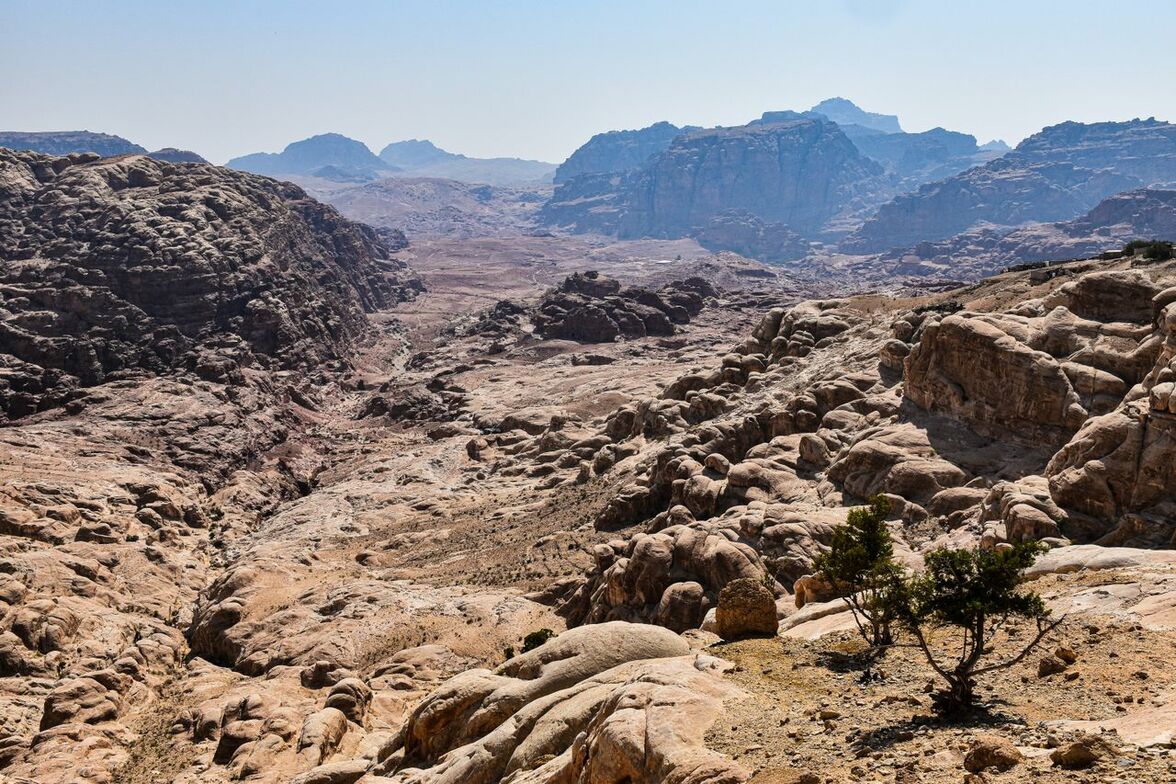
The Negeb (or Negev) is the desert region that stretches south from the Dead Sea toward the Sinai peninsula. It has numerous streams or wadis running through it, but during the long dry season these are no more than trails through the rocky landscape. Wadis are a prominent feature in both Palestinian geography and Israelite poetry: watercourses that are at the flood during the rainy season but dry as a desiccated femur at other times offer an excellent metaphor for fickle human devotion or the undependable nature of foreign gods. The prophet Amos uses imagery comparing a wadi with a more reliable river to indict Israel’s leaders for their on-again, off-again approach to dispensing justice when he writes, “Let justice roll down like waters / and righteousness like an ever-flowing [or never-failing] stream” (Amos 5:24).
This psalmist also uses the wadi as a metaphor, this time in a hopeful vein. Her language evokes the long years of dryness in slavery and exile, and looks to the full-flowing wadi in the rainy season as a sign that God has remembered her people’s predicament and sent the saving floodwaters to fill the wadi again.
We too experience times of dryness in our lives—spiritual, emotional, and psychological dryness threaten to derail us and make us doubt God’s benevolence. Where is God during our times of grief, of failure, of bitter disappointment? Too often God’s glaring absence appears to be God’s most characteristic attribute. I have felt this, anyway; perhaps you too have had this experience. What do we do when we drive our Chevys to the levee only to find that the levee is dry? How do we manage when the wadi is nothing more than a barren track in the sand?
It is in these moments that we need to recall God’s past faithfulness, both in the stories and scriptures of our heritage and in our own lives. Can you remember times when God has come through for you? Times when the grace did not trickle from the shower head but came out full blast? Dwell on those times in your periods of dryness, and live in hope and trust that the wadi will fill again.
Restore our fortunes, Lord, like the watercourses in the Negeb.

-
Community UCC
-
Schwarzwald UCC
-
Trinity UCC
Office Hours
Contact
© 2026 Community UCC. All Rights Reserved.
|
Login
powered by
Website Developed by Tithely