The Good Confession

Bob Turner
April 30, 2026
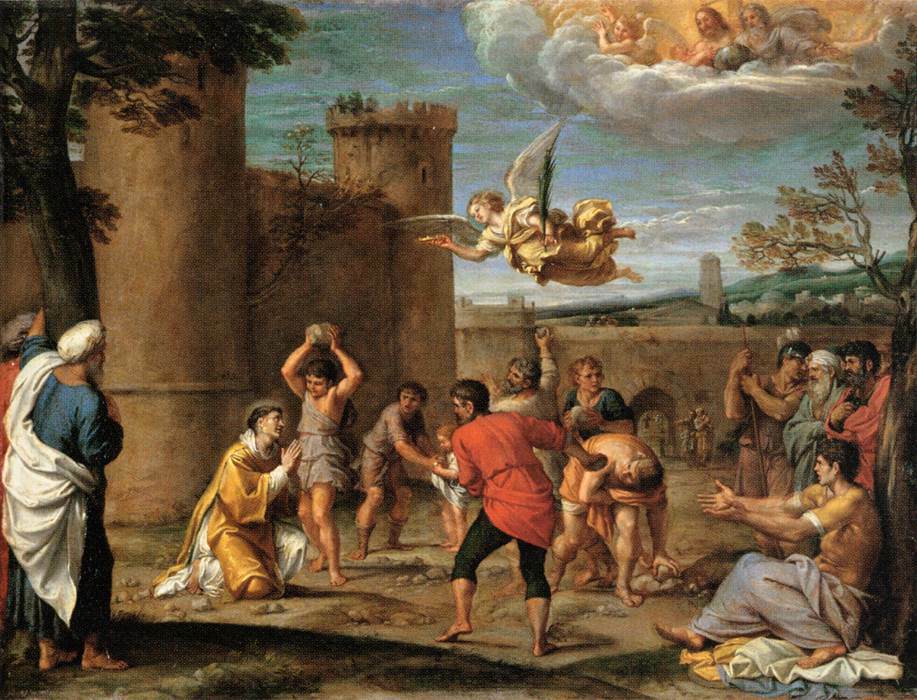
The story of Stephen in the book of Acts is a cautionary tale for our times. He gets himself in trouble through the things he says and does, and, as we will see this Sunday (SPOILER ALERT!) he gets killed because of it.
First, a little background is in order. Stephen is what the New Testament calls a deacon, which at the time categorized those who served the community in very practical, down-to-earth ways. In the case of Stephen and six of his colleagues, this mainly has to do with the distribution of food to widows. It seems that in the early Jerusalem church, distinctions are being made. They are all Jews, but some are Judean or Galilean in origin while others were born outside the homeland. These are called Hellenistic Jews because they speak primarily Greek and originate in the Diaspora. It’s a sad fact of life that we humans can always find reasons to discriminate between people and groups, even in the church. Apparently, a group of widows of Hellenistic origin are being neglected in the daily distribution of food, and some of the Greek-speaking church members complain to Peter and James.
These two leaders solve the problem by appointing seven deacons from among the Hellenists to oversee the disbursement of food. These deacons all have Greek names (Stephen means “crown” in Greek), and their primary task is to take care of the widows. But these guys are too talented and driven to let it go at that. One of the deacons, Philip, becomes a famous barrier-breaking preacher when he brings the good news to a royal eunuch from Ethiopia and to a community of Samaritans. And Stephen, as we see in Acts 6, is a firebrand preacher and a wonder-worker. “Stephen, full of grace and power,” Luke says, “did great wonders and signs among the people” (v. 8), and when his opponents tried to argue with him, “they could not withstand the wisdom and the Spirit with which [Stephen] spoke” (v. 10).
Unable to best Stephen in debate, his opponents stoop to underhanded means to get at him. “They secretly instigated some men to say, ‘We have heard him speak blasphemous words against Moses and God.’ They stirred up the people as well as the elders and the scribes; then they suddenly confronted him, seized him, and brought him before the council” (vv. 11–12). This incident has eerie parallels with the experience of Jesus in this same city of Jerusalem, doesn’t it? As we will discover, the parallels will not end at Stephen’s arrest.
In January of this year an Episcopal bishop in New Hampshire advised his clergy to get their affairs in order—prepare wills, prepay for funerals, what have you—because in the current climate of conflict in our nation, it may no longer be safe to speak the truth in the public square. Bishop Rob Hirschfeld warned his clergy to prepare for “a new era of martyrdom.” He added, “It may be that now is no longer the time for statements, but for us with our bodies to stand between the powers of the world and the most vulnerable.”
Stephen is hailed as the first Christian martyr, and he got his death sentence after preaching a bold sermon in which he recounted the history of Israel and condemned the killing of Jesus by the authorities. But before his arrest, what was he doing? He was helping to feed hungry widows. He was taking a stand between the powers of the world and the most vulnerable. What else was he doing? He was speaking eloquently about the way Jesus fulfills all the gracious promises of God in the scriptures. He was speaking truth to power, and power couldn’t handle it. Power flexed its muscles and Stephen got stoned. With rocks.
I don’t know what is going to happen in our country in the next 2 1/2 years. With ICE activity ramping up in our streets and courthouses, with abandoned factories being purchased and turned into concentration camp-like detention facilities, with our leaders picking unnecessary fights in the Middle East, with hateful political speech endangering politicians and journalists and everyday citizens, with lies having become not an aberration but the coin of the realm, it may be a good idea for all of us to prepare for the possibility of martyrdom. That word, martyrdom, after all, simply means “witness.” It’s the ultimate form of testimony to the good news of Jesus Christ and his challenge to the powers of the world.
Let us, like Stephen, give the good confession. Let us stand up for truth and justice and grace, and let us do so fearlessly and boldly in the name of our martyred and resurrected Lord.

-
Community UCC
-
Schwarzwald UCC
-
Trinity UCC
Office Hours
Contact
© 2026 Community UCC. All Rights Reserved.
|
Login
powered by
Website Developed by Tithely