Painting the Stars

Bob Turner
April 23, 2026
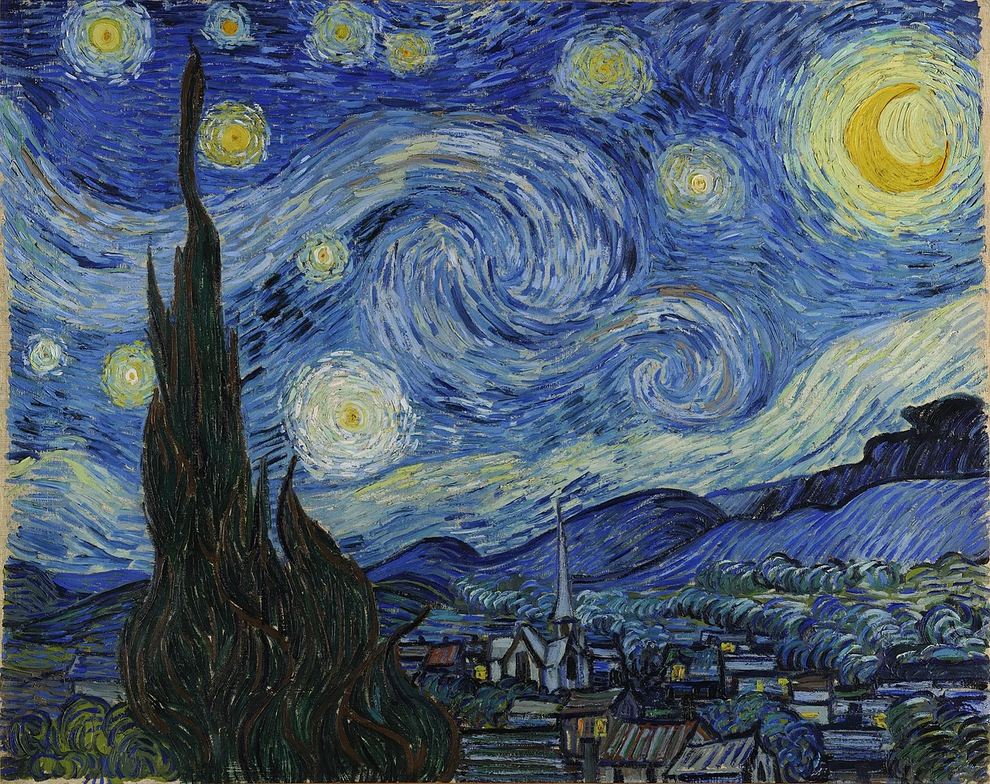
For many years, partly starting with the Enlightenment of the 18th century but really accelerating after Charles Darwin published his works on natural selection and evolution in the mid-19th century, there has been an estrangement, at times even a sense of animosity, between science and religion. Fundamentalists on both sides of the divide have made irresponsible claims. Religious fundamentalists have claimed that every word of the Bible is literally true, so that, for instance, the first couple of chapters of Genesis provide a reliable textbook account of the creation of the universe. On the other extreme, scientific fundamentalists has asserted that human beings can know nothing that is not tangible and measurable, thereby excluding any kind of religious or spiritual sensibility as irrational and untrue.
Fortunately, there have always been persons who fall between these two extreme points on the spectrum—those who understand that science need not be hostile toward religious belief but rather that the two camps represent different approaches to discovering a unified truth. Many Christian thinkers have come to accept the evolutionary process as settled scientific fact, and have worked to find ways to fit that scheme into a theological framework.
Some hold that God set evolution in motion and let it run its own course, kind of watching it play out from the sidelines. Others believe that God and belief in God are products of the evolution of the human species. I for one believe that God accompanies evolution and is changed by God’s association with those who are going through the evolutionary process. That means that as we and other species evolve, God’s way of relating to us changes, so that it is not too big a stretch to say that God also evolves. God’s essential nature as Love is unchanged, but God’s relations with the world undergo changes in response to the vagaries of evolution.
You may hold one of these views I have mentioned, or you may have a different way of conceptualizing the relation between science and religious faith. If these questions intrigue you in any way, I invite you to come to Adult Studies starting this Sunday (at 9am in the church library) as we explore together a video series called Painting the Stars, which looks at these issues from a perspective of friendship between the disciplines of science and theology. What can science teach us about faith? How can faith inform how we go about conducting science? And where does God fit into all these mysteries? We will touch on these and other issues during this seven-week study. Each session will start with the 20-minute video and will proceed with a guided set of discussion questions and activities.
Even if you have never participated in Adult Studies before, I hope you will consider joining us for this special series that asks vital questions on the frontiers of both scientific and theological inquiry.

-
Community UCC
-
Schwarzwald UCC
-
Trinity UCC
Office Hours
Contact
© 2026 Community UCC. All Rights Reserved.
|
Login
powered by
Website Developed by Tithely